
HPE JG639A network switch module Gigabit Ethernet
MPN: Quick Code:
(HP 10500/7500 20G UNIFIED,WIRED-WLAN MODUL für 10500 und 7500er Switches)
** REFURBISHED **
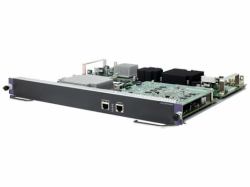
Note: Image accuracy is not guaranteed. Please do not rely solely on the image for your purchase.
$148.74 $178.49 inc. VAT
1 in stock Check stock Available
PLEASE NOTE: there is a 4 day lead time on dispatch for this item.
All products on this website are available duty-free in the EU
Overseas Customers with EU-VAT number do not pay VAT. -
- Quick Code:
- MPN:
- Manufacturer:
- HPE
- EAN Code:
Notify me when price drops
NOTE: The information below is provided for your convenience only and we cannot guarantee its accuracy. If necessary, please verify with us before purchasing.
Wi-Fi Clear Connect: Wi-Fi Clear Connect provides a system-wide approach to ensure WLAN reliability by proactively determining and adjusting to changing RF conditions via advanced radio resource management and by identifying rogue activity. These capabilities optimize WLAN performance by making decisions at a system-wide level. These features are described in more detail within this data sheet.
End-to-end QoS: the HP 10500/7500 20G Unified Wired-WLAN Module supports the DiffServ standard and IPv6 QoS; the QoS DiffServ model includes traffic classification and traffic policing, completely implementing the six groups of services—EF, AF1 through AF4, and BE.
Web-based authentication: provides a browser-based environment to authenticate clients that do not support the IEEE 802.1X supplicant
IPv6: IPv6 host: enables controllers to be managed and deployed at the IPv6 network's edge . Dual stack (IPv4 and IPv6): transitions customers from IPv4 to IPv6, supporting connectivity for both protocols. MLD snooping: directs IPv6 multicast traffic to the appropriate interface, preventing traffic flooding. IPv6 ACL/QoS: supports ACL and QoS for IPv6 network traffic.
Flexible forwarding modes: - support both centralized and distributed modes. - enable all wireless traffic to be sent to the module for processing using centralized forwarding or dropped off locally using distributed mode. - provide branch office survivability with distributed mode: that is, where APs are deployed at branches, authenticated clients can continue to access local resources in the event connectivity to the controller is lost.